
Shawn Freeman
CEO


Running a business today means depending on technology every single hour of every workday. Your email needs to flow, your files need to be accessible, your team needs to collaborate, and your customer data needs to stay secure. When any part of this complex system breaks down, everything grinds to a halt. That's where it infrastructure management services become essential, transforming how businesses handle their technology from reactive firefighting to proactive optimization. For small and mid-sized businesses, getting infrastructure management right means the difference between constant tech headaches and smooth, reliable operations that actually support growth.
IT infrastructure management services encompass the complete oversight and maintenance of all your technology components. This includes your servers (whether physical or cloud-based), network equipment, security systems, software applications, data storage, and every connection point in between.
Think of it like maintaining a building. You don't just fix the roof when it leaks. You inspect it regularly, replace worn shingles before they fail, monitor for structural issues, and plan for eventual upgrades. Infrastructure management works the same way with your technology.
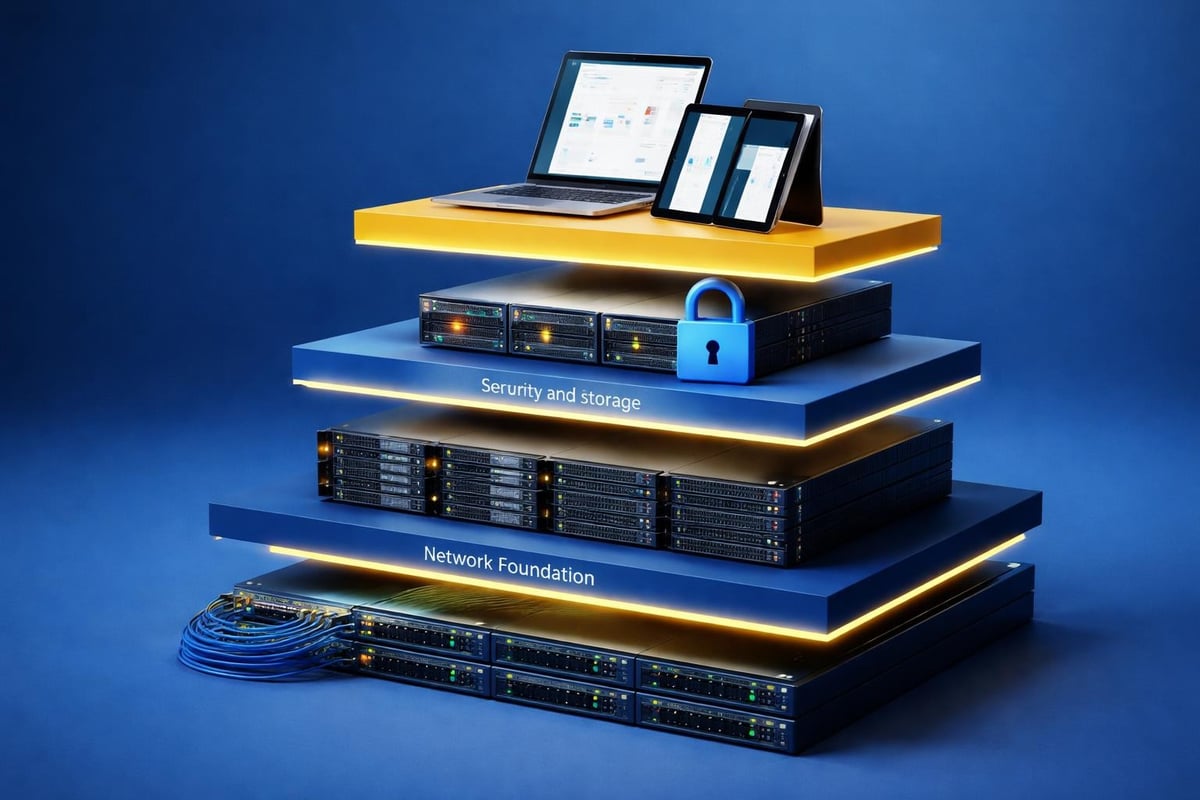
Your IT infrastructure has several layers that all need attention:
Each component depends on the others. When one fails or underperforms, the ripple effect can shut down entire departments. Professional managed IT services ensure these pieces work together reliably.
Many business owners start by handling IT themselves or assigning it to someone whose actual job is something completely different. Your office manager or that "tech-savvy" employee ends up troubleshooting printer issues instead of doing the work you hired them for.
The hidden costs add up quickly:
A 2024 study found that unplanned downtime costs small businesses an average of $427 per minute. That's over $25,000 per hour. Most small businesses can't absorb those losses without serious pain.
Consider what happens when your email goes down for three hours. Your sales team can't respond to prospects. Customer service can't handle inquiries. Accounting can't send invoices. Everyone sits around waiting, or they use personal email (creating security risks), or they just go home early.
Now multiply that scenario across all your systems. Your CRM crashes during a big sales push. Your file server becomes inaccessible right before a client deadline. Your network slows to a crawl because nobody's monitoring bandwidth usage.
These aren't theoretical problems. They happen to businesses every single day. The companies that bounce back quickly are the ones with proper it infrastructure management services in place.
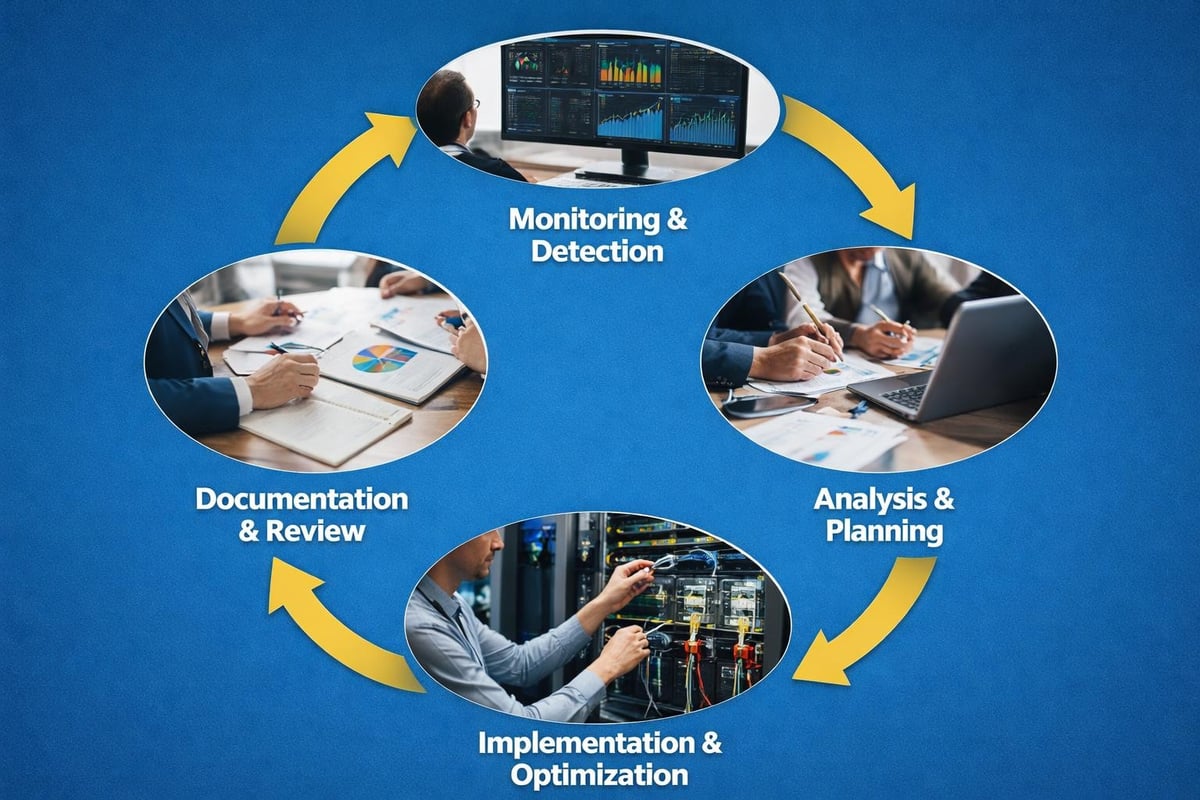
Professional IT infrastructure management services follow established frameworks like ITIL (Information Technology Infrastructure Library) to deliver consistent, reliable results. Rather than waiting for problems, these services actively prevent them.
Modern infrastructure management starts with 24/7 monitoring of your systems. Specialized software watches for warning signs: servers running hot, hard drives filling up, unusual network traffic patterns, security threats, and performance degradation.
When potential issues appear, your IT team receives alerts and can fix problems before they impact your business. That hard drive showing early failure signs? It gets replaced during off-hours before it crashes. That security patch Microsoft released? It gets tested and deployed before hackers can exploit the vulnerability.
| Traditional Break-Fix IT | Proactive Infrastructure Management |
|---|---|
| Wait for something to break | Monitor systems constantly |
| Emergency repairs during business hours | Scheduled maintenance during off-hours |
| Reactive security patches | Systematic vulnerability management |
| Unknown system performance | Regular performance optimization |
| Unpredictable costs | Predictable monthly investment |
Beyond daily management, effective it infrastructure management services include strategic planning. Your technology needs to align with your business goals, not work against them.
This means regular reviews of your infrastructure to identify:
An experienced provider will also help you understand the IT audit process that identifies gaps and opportunities in your current setup.
When it infrastructure management services work properly, you notice the absence of problems more than the presence of solutions. Your technology just works, freeing your team to focus on what matters.
Immediate operational improvements include:
Let's talk numbers. Most small businesses spend 6-12% of their revenue on technology when they manage it themselves, with significant year-to-year variation due to unexpected failures and emergency replacements.
With professional it infrastructure management services, that spending becomes predictable and typically drops to 3-8% of revenue. You eliminate expensive emergency repairs, reduce downtime losses, and extend the life of your equipment through proper maintenance.
More importantly, you gain the ability to plan. Instead of scrambling when the server dies, you have a roadmap for technology investments aligned with business growth.
Not all IT infrastructure management services work the same way. Understanding your options helps you make the right choice for your business.
Remote infrastructure management has become incredibly sophisticated. Most issues can be diagnosed and resolved without anyone setting foot in your office. Monitoring, software updates, security patches, and configuration changes all happen remotely.
However, some situations still require hands-on support. Hardware failures, network cable issues, and new equipment installations need someone physically present. The best approach combines strong remote capabilities with responsive on-site support when needed.
Always Beyond provides this balanced approach, with remote monitoring and management backed by local technicians who can be on-site when necessary.
Some businesses have internal IT staff but need additional expertise and 24/7 coverage. Others prefer to outsource their entire IT function. Both models work, depending on your situation.
Full-service infrastructure management means the provider handles everything. You have a complete IT department without the overhead of full-time employees, benefits, and training costs.
Co-managed services supplement your existing team. Your in-house person handles daily user support while the managed service provider manages infrastructure, security, and specialized projects.
For most small to mid-sized businesses, full-service makes more financial sense. You get broader expertise, better coverage, and predictable costs without managing IT employees.
Choosing an IT infrastructure management services provider requires looking beyond pricing to find a true partner who understands your business needs.
Your provider should demonstrate expertise across all infrastructure components:
Many IT providers talk a good game about Mac support, but few deliver on it. If your creative team or executives prefer Macs, make sure your provider has genuine expertise, not just reluctant tolerance.
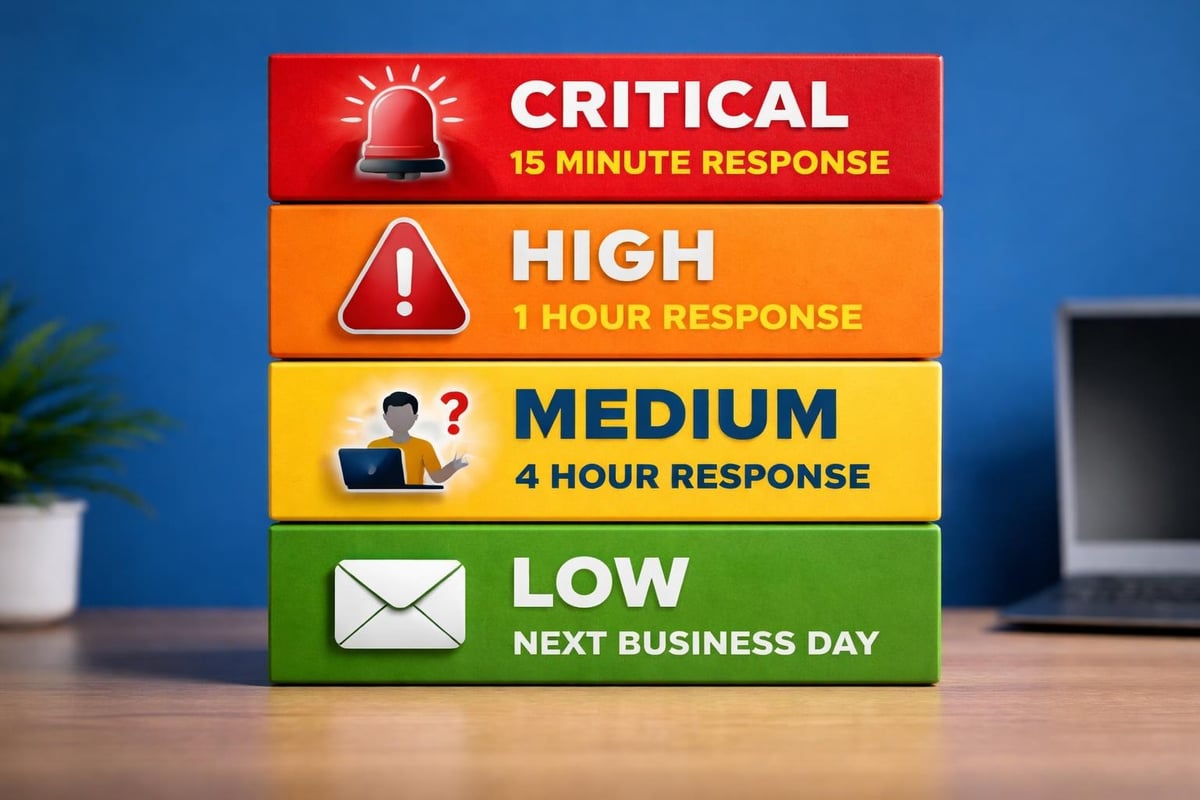
Understanding response times matters enormously. What counts as an "emergency"? How quickly will someone respond? When will the issue actually be resolved?
Look for providers who offer:
The provider's communication style tells you everything about the relationship you'll have. Do they explain things in plain language or hide behind technical jargon? Do they listen to your business needs or just push products?
Traditional IT contracts lock you in for years, betting that you'll be too inconvenienced to switch even if service deteriorates. This creates an unhealthy dynamic where the provider's incentive to perform diminishes once you've signed.
No-contract infrastructure management changes the equation entirely:
This model only works when the provider delivers genuinely excellent service. Companies offering no-contract terms are confident in their ability to keep you as a client through performance, not paperwork.
Always Beyond built the business on this philosophy. When you're not worried about contract minimums and cancellation fees, you can focus on whether the service actually helps your business.
Infrastructure management doesn't exist in isolation. It connects directly to your cybersecurity strategy, compliance requirements, and business continuity planning.
Your infrastructure forms the foundation of your security posture. Properly managed infrastructure includes:
Many businesses discover compliance requirements (HIPAA, SOC 2, GDPR, etc.) only when a client demands proof. Having professional it infrastructure management services in place makes compliance significantly easier because the documentation, controls, and procedures are already there.
Infrastructure management includes planning for the worst. What happens when the office floods, a ransomware attack hits, or a critical server fails?
Your provider should maintain current backups, test recovery procedures regularly, and document step-by-step recovery processes. More importantly, they should help you understand your actual recovery time objectives (how long can you be down?) and recovery point objectives (how much data can you afford to lose?).
These aren't just IT questions. They're business decisions about risk tolerance and investment levels. The right provider helps you make informed choices rather than just implementing technical solutions.
Moving from self-managed or poorly managed infrastructure to professional services requires planning, but the process is smoother than most business owners expect.
A thorough provider starts with discovery and assessment. This includes:
This discovery phase, similar to a comprehensive IT maintenance review, typically takes 2-4 weeks depending on infrastructure complexity. The investment pays off because it prevents surprises and creates a solid foundation for ongoing management.
Good providers deliver quick wins during the first 30-60 days while building toward long-term improvements. You might see immediate benefits like:
Longer-term initiatives follow a strategic roadmap developed during discovery. This might include infrastructure modernization, cloud migration, security enhancements, or disaster recovery improvements spread across quarters or years.
Understanding how it infrastructure management services work in practice helps illustrate the value beyond abstract descriptions.
Scenario 1: The Gradual Slowdown
A professional services firm noticed their network getting progressively slower over six months. Users complained, but the in-house "IT person" (actually the operations manager) couldn't find the problem. By the time they brought in professional help, productivity had dropped noticeably.
Infrastructure monitoring would have caught this immediately. The actual problem: a failing network switch creating packet loss and retransmissions. The monitoring system would have flagged the increasing error rates weeks before users noticed, and the switch would have been replaced during off-hours with zero disruption.
Scenario 2: The Security Breach That Never Happened
A manufacturing company's infrastructure monitoring detected unusual outbound traffic from a workstation at 3 AM. The automated alert triggered immediate investigation. Security logs showed a compromised account attempting to exfiltrate customer data.
The infrastructure management team isolated the machine within minutes, blocked the external connection, and contained the breach before any data left the network. Total damage: zero. Without monitoring, the breach would have continued for days or weeks, potentially exposing thousands of customer records.
Scenario 3: The Smooth Growth Story
A marketing agency grew from 12 to 35 employees in 18 months. Their infrastructure management provider tracked growth trends and proactively recommended upgrades before capacity limits hit. New employees started on day one with fully configured systems. File storage expanded seamlessly. Network capacity grew without bottlenecks.
Employees never experienced the growing pains typical of rapid expansion. The owner focused on winning clients and delivering great work, not on technology headaches.
Professional it infrastructure management services leverage sophisticated tools that would be cost-prohibitive for individual small businesses to license and maintain.
Modern infrastructure management uses RMM (Remote Monitoring and Management) platforms that provide:
These platforms, combined with practices from event management frameworks, enable the proactive approach that separates modern infrastructure management from old-school break-fix IT.
Automation handles repetitive tasks consistently and eliminates human error. Your infrastructure management team can automate:
This automation means more consistent results and frees skilled technicians to focus on strategic work rather than repetitive maintenance tasks.
If you're ready to move beyond technology firefighting and establish reliable, professional IT infrastructure management services, the process starts with understanding your current state and desired future state.
Before reaching out to providers, consider these questions:
These answers help you have more productive conversations with potential providers and ensure you find the right fit.
When evaluating IT infrastructure management services, ask:
Pay attention to how they answer. Do they listen to your situation or just pitch their standard package? Do they explain things clearly or use confusing jargon? Can they provide specific examples of how they've helped similar businesses?
When you partner with Always Beyond for it infrastructure management services, you get more than just technical support. You get a team committed to understanding your business and delivering solutions that actually fit your needs.
What makes the approach different:
The "always beyond" philosophy means going further than expected, delivering more value than promised, and treating your business technology as seriously as you do. Your infrastructure becomes a competitive advantage rather than a constant source of stress.
Professional it infrastructure management services transform technology from a constant headache into a reliable business asset that supports growth and reduces stress. When your infrastructure is properly managed, monitored, and maintained, you gain predictable costs, better security, higher productivity, and the peace of mind that comes from knowing experts are watching over your systems 24/7. Always Beyond delivers this level of comprehensive infrastructure management without long-term contracts, combining technical expertise with a genuine commitment to your business success. Ready to stop fighting technology fires and start leveraging IT as a strategic advantage? Book a free consultation to discuss how professional infrastructure management can help your specific situation.
See exactly how your current IT setup measures up to our Hack Free standards. Enter your business email to receive:
