
Shawn Freeman
CEO


The IT landscape has transformed dramatically over the past decade, and with it, the role of managed service providers has evolved from simple break-fix support to comprehensive technology partners. MSP businesses now serve as the backbone of digital infrastructure for thousands of small and medium-sized companies across North America. These specialized IT service providers handle everything from daily tech support and network monitoring to advanced cybersecurity and cloud migration. For business owners juggling countless responsibilities, understanding how MSP businesses operate and what they can offer has become essential knowledge in 2026.
MSP businesses provide ongoing IT management and support services under a subscription or flexible service model. Unlike traditional IT consultants who charge hourly rates and respond only when something breaks, managed IT services focus on preventing problems before they disrupt your operations.
The scope of services from MSP businesses typically includes:
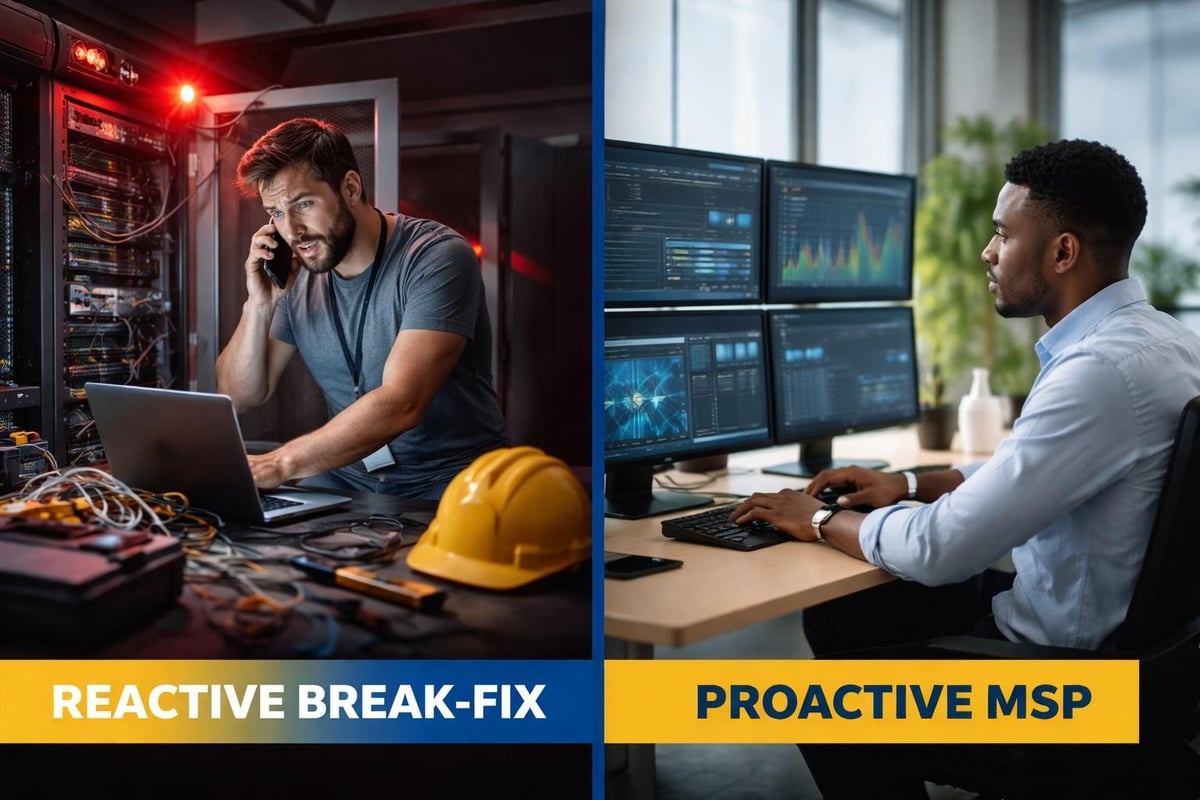
Traditional IT support operated on a reactive model. Your server crashes, you call someone, they fix it, you pay a hefty bill. MSP businesses flip this equation entirely.
Through continuous monitoring and regular maintenance, these providers identify vulnerabilities and performance issues before they escalate. A well-managed MSP relationship means fewer emergency calls, less downtime, and more predictable IT expenses.
According to industry research on managed IT services, companies working with MSPs experience up to 50% fewer critical system failures compared to those relying on break-fix support. That reduction translates directly to saved revenue and reduced stress for business owners.
The MSP industry faces significant transformation as client needs become more sophisticated and technology complexity increases. Several key trends are reshaping how these businesses operate and deliver value.
One major challenge facing MSP businesses today is tool sprawl. Many providers have accumulated dozens of different software platforms over years of operation, creating inefficiency and increasing the learning curve for technicians.
Platform consolidation has emerged as a critical solution for MSPs struggling with operational complexity. By streamlining their technology stack, forward-thinking MSP businesses can respond faster to client needs and reduce overhead costs.
For clients, this consolidation means working with providers who spend more time solving your problems and less time wrestling with their own systems.
Cyber threats have never been more prevalent or sophisticated. Ransomware attacks, phishing schemes, and data breaches make headlines weekly, and small businesses are increasingly targeted because attackers assume they have weaker defenses.
Pressure continues mounting on MSPs to deliver comprehensive cybersecurity services beyond basic antivirus software. In 2026, successful MSP businesses must offer layered security approaches including:
| Security Layer | Purpose | Business Impact |
|---|---|---|
| Email filtering | Blocks phishing and malware | Prevents credential theft |
| Multi-factor authentication | Adds login verification | Stops unauthorized access |
| Security awareness training | Educates employees | Reduces human error |
| Advanced threat detection | Identifies unusual activity | Catches breaches early |
| Incident response planning | Prepares for worst-case scenarios | Minimizes damage and recovery time |
Always Beyond's cybersecurity services reflect this comprehensive approach, recognizing that effective protection requires multiple overlapping defenses working together.
Generic IT support no longer meets the needs of modern businesses. Companies using Google Workspace need providers who truly understand that ecosystem, not just generalists who prefer Microsoft. Mac-heavy creative agencies need technicians comfortable with Apple's business tools.
The most successful MSP businesses in 2026 are those who develop deep expertise in specific platforms or industries. This specialization allows them to solve problems faster and provide more strategic guidance tailored to how clients actually work.
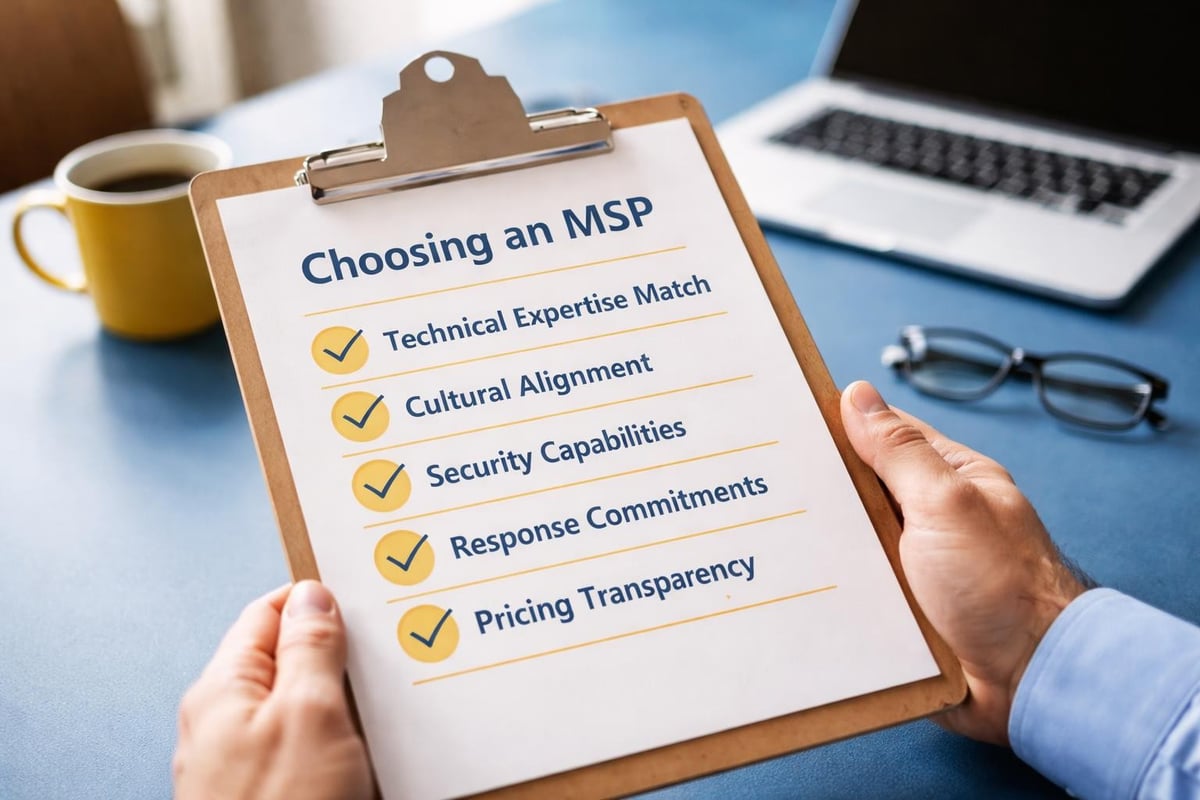
Not all managed service providers deliver equal value. Understanding what separates exceptional MSP businesses from mediocre ones helps you make smarter partnership decisions.
The best MSP businesses don't wait for you to ask what they've been doing. They provide regular reports showing system health, security status, and projects completed. MSP best practices emphasize transparent communication as essential for building client trust.
When planning IT maintenance windows or implementing security updates, quality providers explain the business impact in plain language, not technical jargon.
Many MSP businesses require multi-year contracts that lock clients into relationships regardless of service quality. This approach protects the provider but creates risk for the client.
Progressive MSP businesses recognize that earning your business every month creates better outcomes for everyone. Month-to-month or flexible agreement structures demonstrate confidence in service quality and respect client autonomy.
When your email system goes down or your network becomes inaccessible, every minute costs money and frustrates staff. Effective MSP businesses commit to specific response times based on issue severity.
A clear service level agreement might specify:
The key difference with quality providers isn't just having these commitments but consistently meeting them.

The financial impact of partnering with MSP businesses extends far beyond the monthly service fee. Understanding the full economic picture helps justify the investment and set appropriate expectations.
One of the most valuable aspects of working with MSP businesses is converting unpredictable IT expenses into fixed monthly costs. Instead of budgeting for unknown emergencies and surprise repair bills, you know exactly what technology support will cost each month.
This predictability simplifies financial planning and eliminates the stress of wondering whether this quarter will bring a $10,000 server replacement or a $3,000 security incident cleanup.
When your systems fail, employees can't work. For a company with 20 staff members earning an average of $30 per hour, every hour of complete downtime costs $600 in lost productivity, not including the revenue impact of missed customer interactions.
MSP businesses minimize these incidents through:
Companies working with quality MSP businesses typically experience 80-90% fewer hours of unplanned downtime annually compared to those managing IT internally or using break-fix support.
Hiring a full-time IT professional with expertise in cybersecurity, cloud infrastructure, and network management costs $80,000-$120,000 annually, plus benefits. For many small businesses, that's simply not feasible.
MSP businesses provide access to teams of specialists across multiple technology domains at a fraction of that cost. Your monthly service fee gives you the equivalent of a full IT department's knowledge and experience.
The managed services market includes thousands of providers ranging from one-person operations to multinational corporations. Finding the right fit requires evaluating several key factors beyond price.
If your business runs primarily on Google Workspace, partnering with an MSP that specializes in Microsoft environments creates unnecessary friction. Evaluate whether potential providers have genuine expertise in the platforms you actually use.
Questions to ask include:
The relationship with your MSP business is a partnership, not a vendor transaction. You'll interact with these people regularly, often during stressful situations when systems aren't working.
Pay attention to how potential providers communicate during the sales process. Do they listen to your concerns or push predetermined packages? Do they explain concepts clearly or hide behind technical jargon? Do they respect your time?
The "always beyond" philosophy means going above expectations consistently, not just when trying to win new business. Look for providers who demonstrate this commitment from the first conversation.
In 2026, cybersecurity expertise is non-negotiable for MSP businesses. Every provider should offer comprehensive security services, not just basic antivirus.
Evaluate their approach by asking:
Understanding an MSP's IT audit process reveals how thoroughly they approach security and system health.
Several myths about managed service providers persist, creating confusion for business owners evaluating their options.
Many small business owners assume managed services are designed for enterprises with hundreds of employees. In reality, companies with as few as 5-10 employees benefit significantly from MSP partnerships.
The value proposition actually increases for smaller organizations because they typically lack internal IT expertise entirely. A 500-person company might have a full IT department that works with an MSP for specialized support. A 15-person company gets their entire IT function through the MSP relationship.
Some business owners worry that outsourcing IT management means losing visibility and control over their systems. Quality MSP businesses do the opposite, providing more transparency than most companies have when managing technology internally.
Regular reports, proactive communication, and strategic planning sessions actually give you better understanding of your technology environment and how it supports business objectives.
The managed services industry includes massive variation in service quality, scope, and specialization. Assuming all providers are interchangeable leads to poor partnership decisions.
Some MSP businesses focus exclusively on infrastructure monitoring. Others provide comprehensive support including help desk, strategic planning, and cybersecurity risk assessment. Some specialize in specific industries or technologies.
Taking time to understand what each provider actually offers, rather than assuming standardization, leads to much better outcomes.
Looking ahead, several trends will continue reshaping how MSP businesses operate and deliver value to clients.
AI-driven tools are transforming how MSP businesses detect threats, resolve common issues, and optimize system performance. Machine learning algorithms can identify unusual network behavior that might indicate security breaches, often catching threats that traditional signature-based antivirus misses.
For clients, this means faster problem resolution and more sophisticated protection without corresponding cost increases.
As businesses adopt more cloud services and remote work becomes permanent for many organizations, MSP businesses must adapt to managing increasingly distributed technology environments.
The old model of a central office with a server room is giving way to hybrid infrastructures spanning cloud platforms, home offices, mobile devices, and traditional on-premises systems. Successful MSP businesses excel at securing and supporting these complex, distributed environments.
Data privacy regulations continue expanding globally, creating new compliance requirements for businesses of all sizes. MSP businesses increasingly serve as compliance partners, helping clients navigate requirements like GDPR, CCPA, and industry-specific regulations.
This advisory role extends beyond technical implementation to strategic guidance on data handling, privacy policies, and risk management.
If you're currently managing IT internally or using break-fix support, transitioning to a managed services relationship requires some planning.
Reputable MSP businesses begin new client relationships with comprehensive discovery and documentation. This process typically includes:
This onboarding period usually takes 2-4 weeks and sets the foundation for the ongoing relationship. Quality providers invest heavily in this phase because thorough understanding prevents future problems.
Partnering with MSP businesses doesn't mean you'll never experience IT issues again. Technology inherently involves some unpredictability. What changes is how quickly problems get resolved and how rarely they occur.
During the first few months, providers typically tackle accumulated technical debt, deferred updates, and security gaps. This catch-up period gradually gives way to smooth, proactive management where problems become increasingly rare.
How do you know whether your MSP relationship is delivering value? Track these metrics:
| Metric | What to Measure | Target Direction |
|---|---|---|
| System uptime | Percentage of time systems are available | Increasing |
| Ticket resolution time | Hours from issue report to resolution | Decreasing |
| Security incidents | Number of breaches or compromises | Zero |
| Employee IT satisfaction | Staff survey responses about tech support | Improving |
| Unplanned IT expenses | Costs outside the managed services agreement | Decreasing |
Regular business reviews with your MSP should examine these metrics and discuss how technology supports your strategic objectives.
The fundamental economics of MSP businesses create alignment between provider success and client success. Unlike break-fix models where providers profit from your problems, managed services revenue comes from keeping systems running smoothly.
This alignment means your MSP business partner is incentivized to prevent issues, implement best practices, and help you work more efficiently. When you succeed and grow, their engagement naturally expands. When you struggle with technology problems, they're losing money and reputation.
The subscription model also allows MSP businesses to invest in advanced tools, ongoing training, and specialized staff that break-fix consultants simply can't afford. These investments directly benefit clients through better service quality and broader expertise.
Understanding how managed services IT support differs from traditional models helps explain why this approach has become the dominant IT service delivery method for growing businesses.
MSP businesses have evolved into essential technology partners for companies that want to focus on their core business rather than wrestling with IT challenges. The right provider brings expertise, proactive support, and strategic guidance that transforms technology from a source of stress into a competitive advantage. Always Beyond delivers comprehensive managed IT services with a human-first approach, specialized expertise in Mac and Google Workspace environments, and flexible month-to-month agreements that let our work speak for itself. Ready to experience IT support that goes beyond expectations? Book a free consultation to discuss how we can help your business thrive.
See exactly how your current IT setup measures up to our Hack Free standards. Enter your business email to receive:
