
Shawn Freeman
CEO

Running a small business means juggling countless responsibilities, and technology shouldn't be one more thing keeping you up at night. Whether you're struggling with outdated systems, security concerns, or simply wondering if your tech investments are paying off, it consulting offers a practical path forward. Unlike traditional managed services that lock you into rigid contracts, modern consulting provides the expertise you need, exactly when you need it, helping you make smarter decisions about your technology without the overhead of a full-time IT department.
At its core, it consulting involves bringing in specialized technology expertise to solve specific challenges, plan strategic initiatives, or optimize your existing systems. Think of it as having a trusted advisor who understands both technology and business outcomes.
The consulting approach differs from managed services in several key ways:
Many growing businesses find themselves in a frustrating middle ground. They're too large to manage IT entirely in-house, but not ready for the commitment of traditional managed IT services. This is where consulting shines.

Real-world scenarios help illustrate the value. Consider a 25-person marketing agency that's been cobbling together technology solutions as they've grown. Their file storage is scattered across three different platforms, nobody's quite sure if they're compliant with data protection regulations, and team members waste hours each week dealing with tech frustrations.
Rather than hiring a full-time IT manager or committing to a comprehensive managed service package, they bring in an IT consultant for a three-month engagement. The consultant assesses their current state, identifies security gaps, and creates a roadmap for consolidating systems. The agency gets expert guidance without the ongoing expense.
When you're evaluating whether it consulting makes sense for your organization, focus on the tangible outcomes rather than technical features. According to research on IT consulting services, businesses that leverage external expertise often see improvements in efficiency, cost management, and competitive positioning.
Traditional IT staffing creates fixed costs:
| Expense Type | Full-Time IT Staff | IT Consulting |
|---|---|---|
| Annual salary | $65,000-$95,000 | Pay per project |
| Benefits | 20-30% of salary | None |
| Training | $2,000-$5,000/year | Included in expertise |
| Turnover risk | High replacement cost | Minimal disruption |
With consulting, you pay for results and expertise, not for someone to sit at a desk waiting for issues to arise. This approach gives you access to senior-level talent that would otherwise be financially out of reach.
Most business owners didn't start their company to become technology experts. You need someone who can translate complex IT concepts into business language and help you make informed decisions.
A good consultant asks questions like:
These conversations lead to technology strategies that actually support your business objectives rather than just implementing the latest trends.
The scope of it consulting varies widely based on your needs. Understanding the most common service areas helps you identify where external expertise could make the biggest difference.
Cybersecurity represents one of the most critical areas where businesses seek consulting support. The threat landscape changes constantly, and staying current requires dedicated expertise. Comprehensive risk assessment guidelines emphasize the importance of structured approaches to identifying vulnerabilities.
A cybersecurity consulting engagement typically includes:
For businesses concerned about security risks, specialized cybersecurity assessments provide clarity on where you stand and what steps matter most.
Moving to cloud platforms offers significant benefits, but the transition requires careful planning. Many businesses jump into cloud services without fully understanding the implications for costs, security, and workflow.
An IT consultant helps you navigate decisions like:
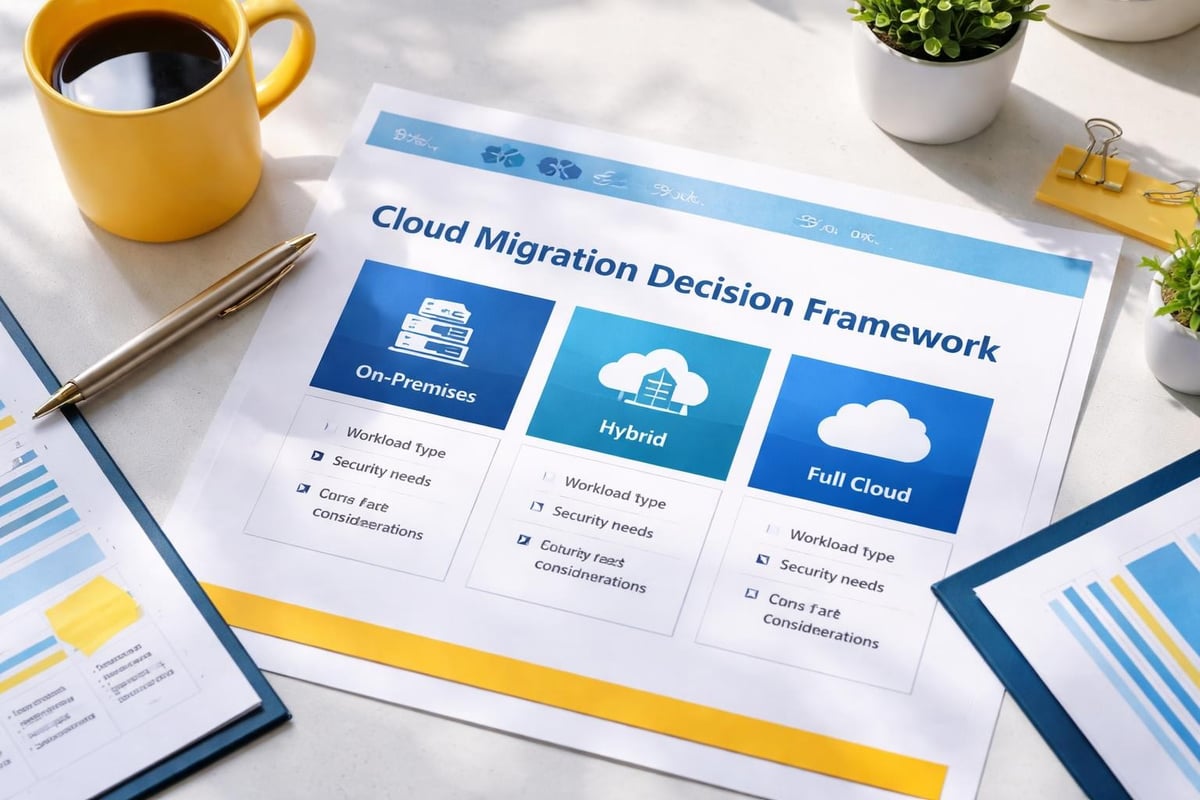
The right consulting partner doesn't just recommend "move everything to the cloud." They analyze your specific situation and create a phased approach that minimizes disruption.
Your technology stack includes all the software, systems, and tools your business relies on. Over time, these often accumulate into a complex web of overlapping solutions that don't communicate well with each other.
| Common Stack Issues | Business Impact | Consulting Solution |
|---|---|---|
| Redundant software | Wasted subscription costs | Consolidation roadmap |
| Poor integration | Manual data entry, errors | Integration strategy |
| Outdated systems | Security risks, inefficiency | Modernization plan |
| Unused features | Not getting ROI | Training and optimization |
A thorough technology audit reveals opportunities to streamline, consolidate, and optimize. According to best practices for IT consulting services, aligning technology with business outcomes starts with understanding what you actually need versus what vendors have sold you over the years.
Not all consulting relationships deliver equal value. The difference often comes down to how well you match with the right partner and how clearly you define expectations from the start.
Technical expertise matters, but it's not the only factor. The best consultants combine technical knowledge with business acumen and communication skills. They should explain complex concepts in plain language and focus on business outcomes rather than technical specifications.
Key qualities to evaluate:
For growing businesses in competitive markets, selecting the right IT consulting firm requires careful consideration of cultural fit and service philosophy.
Different consultants structure their services differently. Some work strictly on fixed-price projects, while others prefer hourly billing. Some require long-term contracts, while others operate on a more flexible basis.
Questions to ask potential consulting partners:
The most valuable partnerships operate with transparency and mutual respect. You shouldn't feel like you're being sold services you don't need, and the consultant should feel empowered to give you honest advice even when it doesn't maximize their revenue.
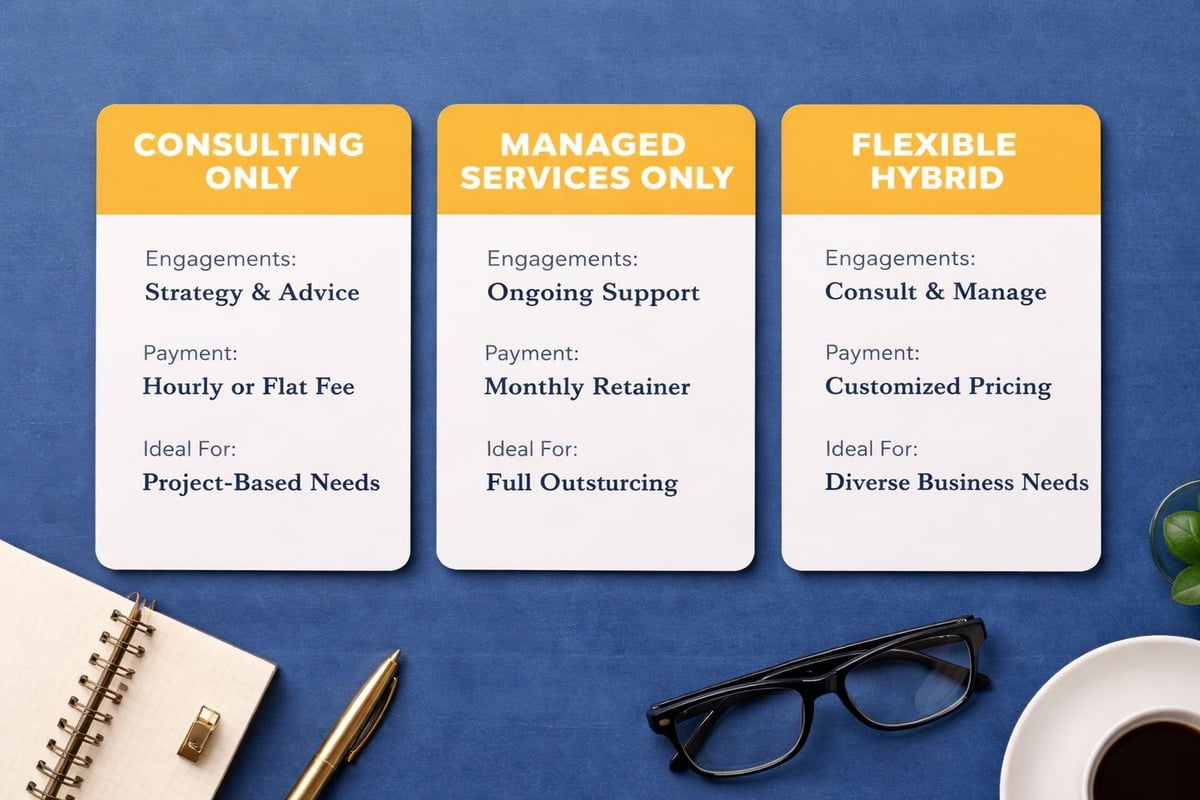
Many business owners wonder whether they need it consulting, managed services, or some combination of both. Understanding the distinction helps you make the right choice for your current situation.
Consulting is typically the better choice when:
Managed services work well when you need consistent, ongoing support for your technology infrastructure. This model typically includes monitoring, maintenance, help desk support, and proactive management of your systems.
For businesses that need reliable, round-the-clock support, comprehensive managed IT services provide peace of mind through continuous oversight of your technology environment.
Here's the reality for many growing businesses: you need both strategic consulting and reliable ongoing support, but traditional rigid service packages don't quite fit.
This is where providers that offer flexible engagement models shine. Instead of forcing you to choose between consulting and managed services, they adapt to your needs. Maybe you start with a consulting project to clean up your technology environment, then transition to light ongoing support without a hefty long-term contract.
Smart business owners want to know they're getting value from their investments. Measuring the return on it consulting requires looking beyond simple cost comparisons to consider time savings, risk reduction, and strategic advantages.
Track these concrete outcomes:
Some consulting value is harder to measure but no less real. Peace of mind knowing your cybersecurity is handled properly. Confidence in your technology roadmap. Freedom to focus on your core business instead of wrestling with IT problems.
According to insights on optimizing IT consulting engagements, preparation and clear expectations significantly improve outcomes. When you know what success looks like before the engagement begins, you're far more likely to achieve it.
The consulting landscape continues to evolve rapidly. Understanding current trends helps you ask informed questions and make better decisions about your technology strategy.
Cyber threats aren't decreasing, and regulations around data protection continue to tightening. Businesses of all sizes now face sophisticated attack methods that were previously aimed only at large enterprises.
IT consulting trends for 2024 and beyond highlight the growing integration of artificial intelligence in both threats and defenses, making expert guidance more valuable than ever.
Modern consulting addresses:
For businesses looking to strengthen their security posture, professional cybersecurity services provide comprehensive protection against evolving threats.
Artificial intelligence is no longer just hype. Tools like Microsoft Copilot and other AI-powered platforms are genuinely changing how businesses operate. But implementing these tools effectively requires understanding both the technology and your business processes.
Consultants help you cut through the noise to identify which AI tools actually make sense for your operations and how to implement them without disrupting workflows or compromising security.
The best consulting relationships now start with business challenges rather than technology solutions. Instead of asking "Should we migrate to the cloud?", consultants ask "What business problems are you trying to solve?"
This shift reflects a broader maturation of the IT consulting industry. Best practices for IT consultants emphasize understanding client needs and managing expectations through clear communication and measurable outcomes.
Getting maximum value from it consulting requires active participation. This isn't a situation where you can just hand off all technology decisions and hope for the best.
Before bringing in a consultant:
The more prepared you are, the more efficiently consultants can work and the better results you'll achieve.
Good consultants want your input and feedback. They should regularly check in on progress, explain their recommendations, and adjust based on your feedback. If you feel like a consultant is disappearing for weeks at a time or making decisions without your involvement, that's a red flag.
The best consulting engagement in the world delivers zero value if recommendations sit in a report gathering dust. Work with your consultant to prioritize action items and create an implementation timeline that's realistic for your business.
Many consultants offer implementation support to help you execute their recommendations. This bridges the gap between strategy and execution, ensuring that good advice actually translates into better technology operations.
Traditional IT relationships often involve lengthy contracts that lock you in regardless of whether the service meets your needs. This creates misaligned incentives where the provider gets paid whether or not you're happy.
The no-contract model flips this dynamic. When a provider must earn your business continuously through quality service, you get better results. You're free to adjust services as your needs change, scale up or down without penalty, and walk away if expectations aren't met.
This flexibility particularly benefits growing businesses where needs can shift rapidly. The technology strategy that makes sense today might need adjustment in six months as you enter new markets, add employees, or launch new products.
For businesses exploring their options, comparing different IT service approaches helps clarify which model aligns best with your specific situation and priorities.
The right IT consulting relationship transforms technology from a source of frustration into a competitive advantage, giving you expert guidance without the rigidity of traditional contracts or the expense of full-time staff. Whether you need help securing your systems, optimizing your technology stack, or planning strategic initiatives, the key is finding a partner who listens first, speaks in business terms rather than technical jargon, and genuinely wants to help you succeed. If you're ready to explore how expert IT guidance could help your business work smarter, Always Beyond offers flexible consulting services designed around your needs, not ours, with the expertise you need and the freedom you deserve.
See exactly how your current IT setup measures up to our Hack Free standards. Enter your business email to receive:
