
Shawn Freeman
CEO


Running a growing business means juggling countless responsibilities, and managing technology infrastructure shouldn't consume all your time and resources. Many business owners find themselves stuck between hiring expensive full-time IT staff or struggling with technology issues that slow down their teams. The decision to outsource IT services offers a middle path that delivers enterprise-level expertise without the enterprise-level overhead, letting you focus on what you do best while technology experts handle the rest.
When you outsource IT services, you're partnering with an external provider to handle some or all of your technology needs. This isn't just about calling someone when your computer crashes. Modern IT outsourcing encompasses everything from proactive network monitoring and cybersecurity to strategic technology planning and cloud infrastructure management.
The scope can include:
Unlike traditional break-fix models where you pay each time something breaks, managed IT services provide ongoing support with predictable costs. You get a dedicated team that learns your business, anticipates problems before they occur, and keeps your technology aligned with your growth goals.

Not every business needs the same level of support. Some companies outsource specific functions like cybersecurity or cloud management while keeping other IT tasks in-house. Others prefer comprehensive support that covers everything technology-related.
Common outsourcing models include:
The right model depends on your current resources, budget, and business complexity. A 15-person marketing agency has different needs than a 50-person manufacturing company, even if both could benefit from outsourced support.
The most obvious advantage when you outsource IT services is cost predictability. Instead of surprise expenses when equipment fails or emergency service calls at premium rates, you pay a consistent monthly fee. But the financial benefits go much deeper than simple budgeting.
According to research on IT outsourcing benefits, businesses can reduce IT costs by 25-40% compared to maintaining full-time staff while simultaneously improving service levels. You're not just saving money on salaries; you're eliminating recruitment costs, training expenses, benefits packages, and the need to keep specialists on staff for skills you only need occasionally.
Technology evolves constantly. Cybersecurity threats that didn't exist six months ago now pose serious risks to businesses. Cloud platforms release new features monthly. Compliance requirements change annually. Expecting one or two in-house IT people to maintain expertise across all these areas is unrealistic.
When you work with a quality provider, you gain access to an entire team of specialists. Need help with cybersecurity? They have dedicated security experts. Planning a cloud migration? They have cloud architects who've completed hundreds of similar projects. Running into Mac-specific issues? You need a provider with actual Mac expertise, not someone who grudgingly supports Apple devices.
| In-House IT | Outsourced IT Services |
|---|---|
| Limited to hired expertise | Access to diverse specialist team |
| Training takes time and budget | Provider maintains current certifications |
| Single point of failure if staff leave | Continuous coverage regardless of individual availability |
| Generalist approach | Specialized knowledge when needed |
The biggest time-waster in business technology isn't fixing problems. It's dealing with the disruption those problems cause. When your email server goes down, how many employees sit idle? When ransomware locks your files, how many hours of work are lost?
Quality outsourced IT providers don't wait for things to break. They monitor your systems 24/7, catching potential issues before they impact your team. They apply security patches before vulnerabilities can be exploited. They identify failing hard drives before data loss occurs. This proactive approach, which you can learn more about through managed services IT support, transforms IT from a cost center into a competitive advantage.

Honesty matters when making business decisions. While outsourcing IT services offers substantial benefits, it also introduces specific challenges you should understand before signing any agreement.
Some business owners worry about losing direct control over their technology infrastructure. When servers sit in your office and IT staff work at desks down the hall, you can walk over and see what's happening. With outsourced services, especially cloud-based solutions, that physical presence disappears.
However, research on IT outsourcing challenges shows that loss of control is often more perception than reality. The right provider gives you more visibility through detailed reporting, real-time dashboards, and regular strategic reviews. You actually gain control over outcomes while delegating the technical execution.
Keys to maintaining appropriate control:
That last point matters more than many business owners realize. When a provider requires multi-year contracts, you're trapped if service quality declines or your needs change. Flexible arrangements respect your ability to evaluate the relationship continuously.
Trusting an external provider with access to your systems and data requires careful vetting. Security risks in IT outsourcing become particularly acute when providers lack robust security protocols or when businesses fail to establish clear data handling requirements.
Before you outsource IT services to any provider, verify their security credentials. Do they maintain relevant certifications? How do they handle data encryption? What's their incident response procedure if a breach occurs? How do they manage access controls to ensure their technicians only access what they need?
Security verification checklist:
A comprehensive approach to cybersecurity should be part of any outsourcing relationship, not an afterthought.
Technology issues happen at inconvenient times. Your accounting software crashes right before month-end closing. Your website goes down during your biggest sales period. Email stops working the morning of a major presentation.
When these crises hit, you need to reach someone who understands your business, responds quickly, and communicates clearly. According to analysis of IT outsourcing drawbacks, communication failures cause more dissatisfaction than technical shortcomings.
The human element matters tremendously. Does the provider assign you a dedicated account manager who learns your business? Do you get shuffled through a phone tree when you need help, or can you reach someone who knows your name? Do they explain technical issues in business terms you understand, or do they hide behind jargon?
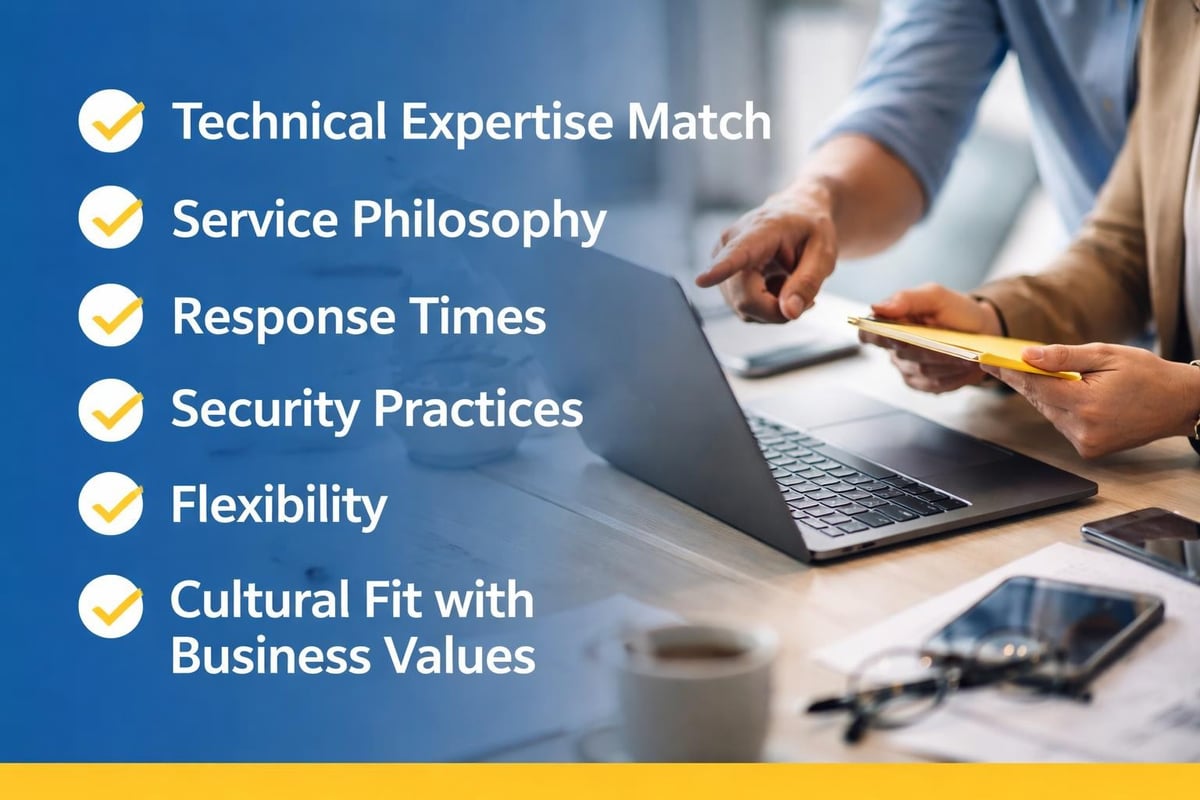
Not all IT service providers operate the same way. Some race to the bottom on price, offering minimal service for minimal cost. Others deliver premium experiences that justify their fees through superior outcomes. Your job is finding the right fit for your business needs and growth trajectory.
Start by understanding how a provider approaches IT support. Are they reactive (waiting for you to report problems) or proactive (monitoring systems to prevent issues)? Do they view themselves as a vendor who completes tasks, or as a strategic partner invested in your success?
Ask specific questions about their service model:
The answers reveal whether they're simply selling you a service package or genuinely committed to helping your business thrive through better technology.
Every business has unique technology requirements. If you run Mac computers and someone offers primarily Windows support, that's a mismatch. If you use Google Workspace and they specialize in Microsoft 365, you won't get optimal support.
Verify they have genuine expertise in:
Don't just take their word for it. Ask for examples of similar clients they support. Request references you can contact. Understanding how they've solved problems for businesses like yours provides valuable insight into how they'll serve you.
Pricing transparency matters. Some providers advertise low monthly rates but charge extra for nearly everything beyond basic monitoring. Others include comprehensive support in a single predictable fee.
Ask for detailed pricing that shows:
Most importantly, understand the contract commitment. Many IT providers lock you into one, three, or even five-year agreements. This protects their revenue but leaves you stuck if service quality drops or your needs change dramatically.
The best providers offer flexibility because they earn your business every month through excellent service. When you can leave anytime, they stay motivated to deliver value continuously. This no-contract approach, while less common, demonstrates confidence in service quality.
Successfully outsourcing IT requires more than just signing an agreement and walking away. The most effective relationships involve active partnership between you and your provider.
Document exactly what you expect from the relationship. What systems will they manage? What response times do you need? How often should you receive reports? What are your growth plans that might affect IT needs?
Create a straightforward service level agreement that covers:
Clarity prevents misunderstandings later. Both parties should know exactly what success looks like.
Schedule consistent check-ins beyond just emergency calls. Monthly or quarterly business reviews keep everyone aligned on priorities, upcoming projects, and emerging challenges.
These meetings should cover:
Treat your IT provider like a key business advisor, not just a vendor. When they understand your business goals, they can recommend technology strategies that support those objectives.
Even when you outsource IT services, your employees need basic technology competency. They should understand security best practices like recognizing phishing emails, creating strong passwords, and protecting sensitive data.
Work with your provider to develop appropriate training for your team. This might include:
The combination of expert external support and competent internal users creates the strongest technology foundation for business success.
Technology isn't a one-time fix. It's an ongoing evolution that should grow with your business. When you outsource IT services to the right partner, you're establishing a relationship that should last years.
Think beyond immediate needs:
Sharing these plans helps your provider anticipate needs and recommend solutions proactively rather than reactively. The best IT partners become invested in your success because your growth benefits both parties.
The business landscape changes faster than ever before. Companies that thrived in 2024 have completely different technology needs in 2026. Remote work patterns shift. Security threats evolve. New tools emerge while others become obsolete. Your IT support should adapt as quickly as your business does.
This is where contract flexibility becomes crucial. When economic conditions change or your business pivots, you need the ability to adjust your IT support accordingly. Rigid multi-year contracts made sense when technology changed slowly, but in 2026, they often create more problems than they solve.
Flexibility enables you to:
The providers most confident in their service quality don't need contracts to retain clients. They earn your business every month by delivering exceptional results, being responsive when you need help, and continuously improving your technology foundation.
Every business reaches different conclusions about outsourcing IT based on their specific situation. A company with strong internal IT leadership and substantial budgets might choose to build in-house capabilities. Most small and medium businesses, however, find that outsourcing delivers better results at lower total cost.
Consider outsourcing when you're experiencing:
The decision ultimately comes down to where you want to invest your time, money, and attention. Working effectively with the right IT service provider means technology becomes an enabler of business success rather than a constant source of stress and unexpected expenses.
Understanding the advantages and potential pitfalls of IT outsourcing helps you make an informed choice that aligns with your business objectives. There's no universal right answer, but for businesses that value expertise, predictability, and the ability to focus on their core mission, outsourcing typically delivers substantial benefits that far outweigh the risks when you choose the right partner.
The key is finding a provider who shares your values, understands your industry, and commits to growing alongside your business without trapping you in inflexible long-term agreements. When you find that partner, technology transforms from a necessary expense into a competitive advantage that helps you serve customers better, operate more efficiently, and sleep better at night knowing your systems are secure and reliable.
Outsourcing your IT doesn't mean giving up control. It means gaining access to expertise, proactive support, and strategic guidance that most businesses can't afford to build in-house. Whether you need comprehensive managed services or specialized support in areas like security and cloud infrastructure, the right partnership transforms technology from a burden into a business advantage. Always Beyond delivers fast, proactive, and personalized IT services without long-term contracts, so you get enterprise-level support with the flexibility your growing business needs. Ready to see how better IT support can reduce stress and free up your time? Book a free consultation to discuss your specific needs and discover how we go always beyond for our clients.
See exactly how your current IT setup measures up to our Hack Free standards. Enter your business email to receive:
