
Shawn Freeman
CEO

Every growing business in 2026 faces one constant challenge: technology is everywhere, but managing it well is the real test. The way you handle your systems can either drive your business forward or hold it back.
Choosing between in-house IT and managed technology is a decision that shapes your future. This guide breaks down what each option means, how costs add up, and why the right choice matters for security, scalability, and peace of mind.
You'll see real-world scenarios, practical comparisons, and a clear decision framework. Ready to cut through confusion and pick the IT strategy that fits your goals? Let’s dive in.
Choosing the right IT management model is a pivotal decision for any business leader. Let’s break down what managed technology and in-house IT really mean, how they differ, and why these choices matter more than ever in 2026.

Managed technology is an all-in-one approach where a single provider oversees your entire tech environment. This means IT support, communications, cybersecurity, print solutions, and cloud services are unified under one roof. Instead of juggling multiple vendors, you get seamless, streamlined support.
Over the last decade, managed technology has evolved from basic IT helpdesk services to a holistic model that covers everything a modern business needs. For example, a Calgary business might use one partner for devices, phones, security, and cloud. This model offers simplicity and peace of mind.
Industry data shows that by 2026, 60% of small and midsize businesses will shift to managed technology for its efficiency and predictability. If you want an even deeper dive, check out this Guide to Calgary Managed IT Services.
In-house IT management means hiring your own team or staff to handle technology needs. These professionals take care of networks, devices, security, and user support directly. For many businesses with legacy systems or highly customized setups, this approach feels like a natural fit.
A typical example might be a 50-person company with an on-site IT manager and a small helpdesk team. They handle everything from troubleshooting printers to managing servers and responding to security issues.
Despite the rise of managed technology, in-house IT remains popular. As of 2025, around 38% of small and medium-sized enterprises still rely on their internal team as their main support system. This model gives you direct control, but it can stretch resources thin as technology grows more complex.
When comparing managed technology with in-house IT, a few core differences stand out. Managed technology offers a broad suite of services, while in-house teams often focus on a narrower scope. Vendor relationships are streamlined with managed technology, giving you one point of contact instead of many.
Predictability is another big factor. Managed technology typically brings fixed, per-user pricing and easier scalability. In-house IT often faces fluctuating costs and slower response to change. Security and compliance are more proactive with managed technology, thanks to dedicated experts and regular updates.
Here’s a quick comparison:
| Feature | Managed Technology | In-House IT |
|---|---|---|
| Scope of Services | Broad, integrated | Narrow, specialized |
| Vendor Management | Single point | Multiple vendors |
| Budget Predictability | High | Variable |
| Scalability | Easy to adjust | Staff-dependent |
| Security & Compliance | Proactive, unified | Reactive, varied |
The way businesses manage technology is changing fast. The shift to remote and hybrid work has put new demands on IT. Managed technology is designed to support secure, flexible work from anywhere, while in-house teams often struggle to keep up.
Cybersecurity threats are on the rise, and compliance requirements are tougher than ever. As tech stacks become more complex, integrating software and hardware is now a top challenge—70% of businesses say this is their biggest IT hurdle.
Subscription-based, per-user pricing is becoming the norm, making managed technology even more attractive. This flexibility helps businesses scale up or down as needed, without worrying about overstaffing or being locked into long-term contracts.
Understanding the total cost of IT management is crucial for business leaders. Let us break down how managed technology stacks up against a traditional in-house IT approach, focusing on real expenses, hidden costs, and the value you gain.

When evaluating IT expenses, it is important to look at both immediate and recurring costs. With managed technology, businesses typically pay a predictable monthly subscription per user, covering support, security, and updates. In-house IT means budgeting for salaries, benefits, ongoing training, and retaining skilled staff. You also face hardware, software, and licensing expenses regardless of your model.
Here is a quick annual cost breakdown for a 25-user business:
| Expense Category | Managed Technology | In-House IT |
|---|---|---|
| IT Support | $36,000 | $60,000 (salary) |
| Benefits/Training | Included | $15,000 |
| Software/Licensing | $12,000 | $12,000 |
| Hardware | $10,000 | $10,000 |
| Total | $58,000 | $97,000 |
For more details on cost structures and salary comparisons, see this Managed IT vs. In-House IT Cost Comparison. Managed technology often delivers significant savings by bundling services, eliminating the need for costly overtime or last-minute contractors.
Managed technology offers flat, per-user pricing, making it easy to forecast IT spending. This predictability helps avoid nasty surprises from hardware failures or overtime pay. In-house IT, on the other hand, brings variable costs. Unexpected absences, emergency fixes, or rapid growth can all push budgets over the edge.
A recent study shows companies save 15 to 30 percent with managed technology due to predictable billing and fewer urgent expenses. For example, a business that switched to managed technology avoided a $10,000 budget overrun during a system upgrade, thanks to all-inclusive support.
Downtime can devastate small businesses. Managed technology providers monitor systems 24/7, rapidly resolving issues before they spiral. In contrast, in-house IT teams may be limited after hours, leading to slower response times and longer outages.
Consider this: the average downtime costs $5,600 per minute for SMBs. Managed technology reduces both the frequency and impact of incidents, saving not just money but also customer trust and productivity. If your team is unavailable when disaster strikes, the costs can multiply quickly.
Managing IT internally often means juggling multiple vendors, contracts, and renewal dates. This can result in missed renewals, duplicate services, and even compliance risks. Managed technology simplifies everything with a single point of contact, consolidated billing, and proactive license management.
A real-world example: One company reduced its annual phone and software costs by 30 percent after switching to managed technology, thanks to bundled services and license optimization. Industry data suggests that 25 percent of IT spending is wasted on unused or duplicate tools, a problem managed providers help you avoid.
The real value of managed technology goes beyond numbers. Leadership and staff save hours previously spent troubleshooting tech headaches. You can focus on growing your business instead of managing IT fires.
Productivity rises, customer experience improves, and compliance becomes less stressful. In one case study, a firm saw a 30 percent reduction in IT disruptions after moving to managed technology. These gains translate into measurable ROI and a more resilient business.
Growth is never a straight line. Businesses need IT that keeps pace, adapts, and doesn’t hold them back. The right approach to managed technology can make scaling up—or down—simple, cost-effective, and stress-free.

Every company faces moments where rapid growth or sudden change is needed. Managed technology empowers you to add or remove users, expand to new locations, or roll out new services without the headaches of hiring and training extra in-house staff.
Picture a retail business scaling up for the holiday rush. With managed technology, new employees get set up with devices, access, and support in hours—not weeks. In-house IT teams often struggle with onboarding delays, leading to lost productivity and frustrated staff.
Quick Comparison: Scaling Up
| Managed Technology | In-House IT | |
|---|---|---|
| User Onboarding | Hours | Days to Weeks |
| Adding Locations | Simple, Remote | Complex, On-site |
| Cost Flexibility | Per User/Month | Fixed Staffing Cost |
With managed technology, you can respond to market shifts and seize new opportunities faster.
Remote and hybrid work are here to stay. Managed technology providers deliver secure remote access, cloud-based tools, and device provisioning that keep teams connected, wherever they are.
In-house IT often faces challenges supporting distributed employees, especially when it comes to security and consistent user experience. 80% of businesses now list remote enablement as a top IT priority.
Always Beyond specializes in seamless remote support, Mac and Google Workspace expertise, and fast response times. Leveraging Cloud Services for Business Growth ensures secure, scalable infrastructure for remote teams.
Managed technology means your workforce stays productive and protected, whether they're in the office or halfway across the world.
Managed technology isn’t just about fixing problems. It's about planning for the future. Providers like Always Beyond offer proactive roadmaps, quarterly reviews, and 18–24 month strategies that keep your business ahead of the curve.
In-house IT teams can get bogged down in daily support, leaving little time for strategic planning. This reactive approach can stall innovation and increase risk.
With managed technology, you get regular check-ins, tailored recommendations, and a clear path for growth. Business owners gain confidence knowing their tech is aligned with their goals.
Business needs change—sometimes overnight. Managed technology offers true flexibility: month-to-month agreements, adjustable services, and solutions tailored to your unique needs.
In-house IT comes with fixed costs and the risk of over- or under-staffing. Managed technology lets you scale up or down without penalty, and 99% of businesses using flexible managed services report high satisfaction.
Always Beyond’s no-contract commitment means you’re never locked in. You get exactly what you need, when you need it, with no surprises.
Protecting your business is more complex than ever. With threats evolving and regulations tightening, the right approach to IT security can be the difference between business continuity and costly setbacks. Here, we compare how managed technology and in-house IT stack up in proactive security, compliance, disaster recovery, and human factors.
Managed technology gives you around-the-clock protection, combining 24/7 monitoring, real-time threat detection, and automated patching. These proactive defenses catch issues before they disrupt your business, unlike in-house IT, which often relies on manual updates and limited after-hours coverage.
Did you know that 60 percent of breaches are linked to unpatched systems? With managed technology, you benefit from consistent security updates, reducing vulnerabilities and minimizing risk. Always Beyond specializes in rapid response and layered protection, ensuring your critical data stays shielded.
For business owners, this means fewer surprises and less stress about cyberattacks. You can focus on growth, knowing your technology is being monitored by experts.
Keeping up with industry regulations is a challenge for most businesses. Managed technology providers simplify compliance by offering built-in tools, regular audits, and documentation that helps you meet requirements with confidence. In contrast, in-house teams may miss changes or lack resources for thorough compliance checks.
For example, Always Beyond's managed technology solutions include compliance frameworks tailored to your industry, regular risk assessments, and audit support. This approach helps businesses pass audits with zero findings and avoid costly penalties.
To learn more about how managed technology addresses both cybersecurity and compliance, see our Business Cybersecurity Services Overview.
By outsourcing compliance tasks, you gain peace of mind and more time to focus on your core business.
Disasters can strike at any time, from hardware failures to cyber incidents. Managed technology ensures your data is protected with automated cloud backups and rapid recovery plans. If something goes wrong, recovery is swift and reliable.
In-house IT often depends on manual backups and local storage, increasing the risk of human error or incomplete recovery. Consider this: 93 percent of companies without disaster recovery close within a year after major data loss.
With managed technology, you get regular backup testing, clear recovery procedures, and business continuity strategies that minimize downtime. Always Beyond delivers seamless recovery for Mac, Windows, and Google Workspace environments, so you are never caught off guard.
Even with strong technology, people can be the weakest link in your security chain. Managed technology providers like Always Beyond offer ongoing security awareness training, phishing simulations, and user-friendly resources.
In-house teams might offer sporadic or outdated training, leaving staff unprepared for modern threats. After implementing managed technology training, businesses often see a marked reduction in successful phishing attacks and risky behaviors.
For example, Always Beyond clients have cut phishing incidents significantly, boosting team confidence and reducing IT headaches. Security culture becomes an everyday habit, not just an annual checkbox.
Every business faces unique technology challenges. Let’s dive into five real-world scenarios where the right IT management model made all the difference. These examples highlight how managed technology delivers practical solutions, time savings, and peace of mind for growing companies.
Imagine a company expanding from 20 to 60 employees within 18 months. With managed technology, new users are onboarded instantly, devices are set up quickly, and support is always on call. There’s no scrambling to hire IT staff or delays in training.
In contrast, in-house teams often struggle to keep up. Hiring takes time, onboarding is inconsistent, and existing staff can get overwhelmed. Businesses using managed technology scale twice as fast, experiencing 50 percent quicker onboarding and fewer disruptions. For more on the cost and scalability factors, see Managed IT vs. In-House IT for Small Businesses.
Many offices juggle phone systems, security, printers, and cloud platforms. Managed technology brings all of this under one roof. Businesses enjoy unified support, one invoice, and seamless integration between services.
With in-house IT, managers often handle multiple vendor contracts and play referee when problems arise. This leads to finger pointing and longer downtime. After switching to managed technology, companies report a 30 percent decrease in downtime and much less administrative hassle.
A small business falls victim to a ransomware attack. With managed technology, the provider detects the threat immediately, isolates affected systems, and starts recovery right away. Data loss is minimized, and operations resume quickly.
In contrast, in-house teams may not have 24 7 monitoring or rapid response capabilities. This can result in longer outages and higher data loss risk. Managed technology clients recover from cyber incidents twice as fast, greatly reducing financial and reputational damage.
Supporting remote staff is now a top priority. Managed technology providers excel at delivering secure remote access, provisioning devices, and offering cloud-based support. Employees work from anywhere with confidence, knowing help is just a click away.
In-house IT often struggles to provide the same level of remote support, leading to security gaps and frustrated employees. With managed technology, businesses see a 40 percent drop in support tickets and much higher team satisfaction.
Always Beyond sets the standard for managed technology in Calgary. Their all-inclusive service covers IT, cybersecurity, and cloud, with special expertise in Mac and Google Workspace environments. Clients love their no-contract flexibility, <90-second response time, and proactive strategy sessions.
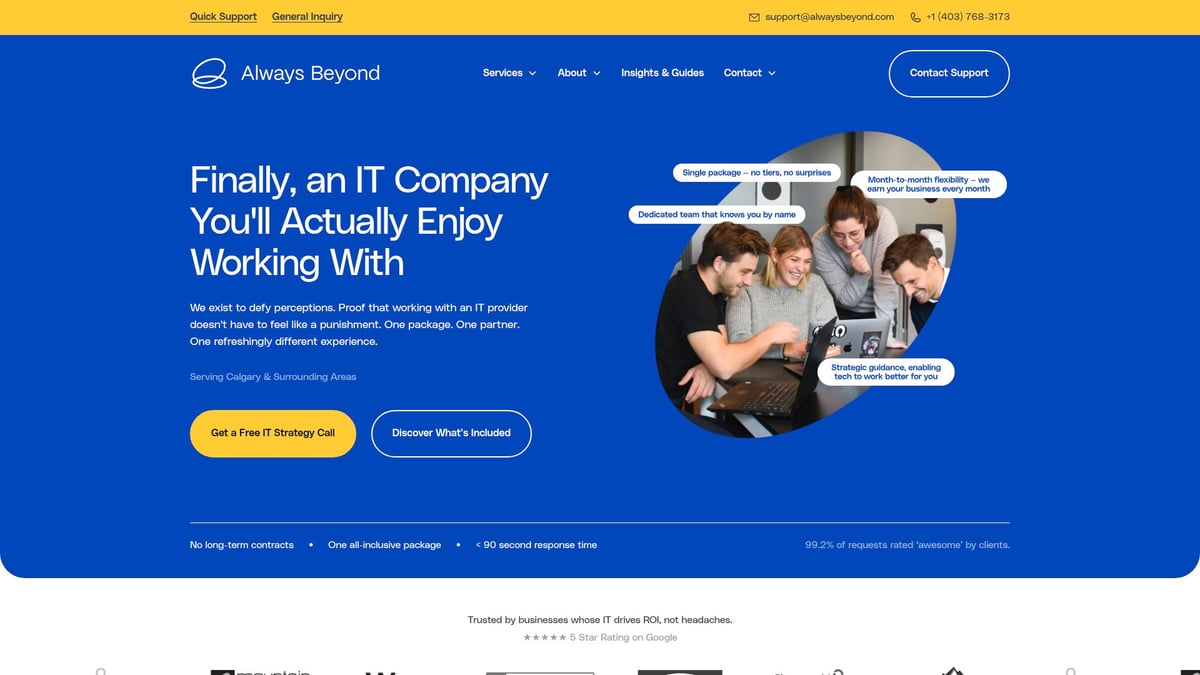
Real-world results include onboarding times cut from five days to one, phone costs reduced by 30 percent, and compliance audits passed with zero findings. For a deeper look at what sets Always Beyond apart, read IT Support & Managed Service Providers. Ready to experience reliable, hassle-free technology management? Book your free IT Security Scorecard and strategy call today.
Choosing between in-house IT and managed technology can feel overwhelming, especially with so much at stake for your business. This framework breaks your decision into manageable steps, making it easier to align technology with your goals, budget, and team needs.
Start by evaluating your current and future business needs. Consider your size, industry, compliance requirements, and growth plans. Are you expanding quickly, or do you need to support remote teams? If your IT setup is causing recurring headaches, or your team is stretched thin, managed technology might be the answer.
Use this quick checklist:
If you answered yes to any, managed technology could free up your time and reduce stress.
When comparing options, look beyond just salaries or monthly fees. Total cost of ownership includes direct, indirect, and hidden costs. Managed technology offers predictable per-user pricing, helping you avoid surprise expenses.
Consider these factors:
Recent 2025 Data Breach Statistics show that security incidents can quickly inflate costs, making predictable managed technology spending even more valuable. Over three years, many businesses find managed technology delivers 20 percent or more lower TCO.
Not all providers are equal. When vetting managed technology partners, focus on expertise, response time, and flexibility. Can they support Mac and Google Workspace environments? Do they provide no-contract options and proactive strategy?
Ask these questions:
With a surge in credential theft incidents in 2025, robust security and human-first support are non-negotiable.
Ready to take the next step? Here’s a simple action plan:
Choosing managed technology means less stress, more time to focus on growth, and a partner who truly goes beyond for your business. Take the first step toward future-proof IT management today.
You’ve just explored the pros and cons of managed technology versus in house IT, and I know it can feel like a big decision for your business’s future. Whether you’re struggling with unpredictable tech costs, worried about security, or simply want your team focused on what they do best, having the right IT strategy makes all the difference. If you’re curious how Always Beyond’s human first approach can simplify your technology, boost your security, and save you time (without locking you into long term commitments), why not get tailored advice from experts who get it Take the next step and Get a Free IT Strategy Call.
See exactly how your current IT setup measures up to our Hack Free standards. Enter your business email to receive:
